Evaluating the 3D Robot Cracked Hole Tumbler Wrap 30 for Sublimation Projects
For crafters and small business owners specializing in custom drinkware, selecting the right sublimation design is a critical step that influences both production efficiency and final product appeal. The 3D Robot Cracked Hole Tumbler Wrap 30 represents a specific category of digital assets designed for 20 oz skinny tumblers. Unlike standard flat illustrations, this design leverages depth cues and texture simulation to create a visual experience that mimics three-dimensional objects on a two-dimensional surface. Understanding the nuances of this specific wrap, its technical requirements, and how it compares to other design styles is essential for making an informed purchasing decision.
Defining the Design Aesthetic and Technical Specifications
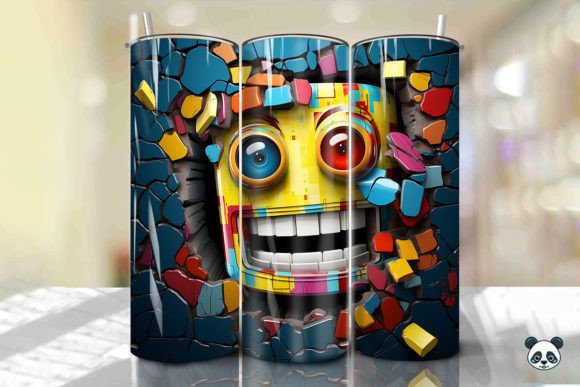
The core appeal of the 3D Robot Cracked Hole Tumbler Wrap 30 lies in its unique combination of sci-fi robotics and distressed textures. The "cracked hole" element suggests a breach in a metallic surface, revealing the robot character beneath or integrating it into a damaged wall aesthetic. This approach differs significantly from traditional watercolor or vector-style robot designs, which often rely on clean lines and soft gradients. Here, the focus is on realism, shadow play, and the illusion of depth.
From a technical standpoint, this asset is typically delivered as a high-resolution PNG file, often sized around 9.3 inches by 8.2 inches at 300 DPI. This resolution is non-negotiable for sublimation printing; anything lower risks pixelation when stretched over the curved surface of a tumbler. The dimensions are pre-calculated for standard 20 oz skinny tumblers, accounting for the necessary overlap and the curvature distortion that occurs during the wrapping process. It is important to note that this is a digital download only. No physical tumbler or printed transfer is included, placing the onus of production entirely on the buyer's equipment and expertise.
Comparative Analysis: 3D Textured Wraps vs. Flat Illustrations
When evaluating whether the 3D Robot Cracked Hole Tumbler Wrap 30 is the right choice for your inventory, it is helpful to compare it against other prevalent design categories in the sublimation market.
- Visual Depth vs. Simplicity: Flat illustrations, such as simple line art or cartoon robots, offer a clean, modern look that appeals to a younger demographic or those preferring minimalism. In contrast, the 3D cracked hole style offers a gritty, industrial feel. This makes it better suited for customers who enjoy gaming aesthetics, cyberpunk themes, or rugged outdoor gear. The trade-off is complexity; 3D designs require more precise alignment during application to ensure the "crack" lines up correctly with the tumbler's seam.
- Background Integration: Many standard wraps feature transparent backgrounds or simple patterns. The "Cracked Hole" variant usually includes a complex background that simulates metal or concrete. This eliminates the need for the creator to source a separate background pattern but reduces flexibility if you wish to change the base color of the tumbler itself. With a full-coverage 3D design, the underlying tumbler color is often completely obscured, whereas lighter designs allow the tumbler's powder coat color to show through.
- Seamless Patterns vs. Single Scene: Some users prefer seamless robot patterns that can be tiled endlessly. While versatile for various cup sizes, seamless patterns can sometimes look repetitive. The 3D Robot Cracked Hole Tumbler Wrap 30 is generally a composed scene. This provides a focal point and a narrative element (the robot emerging from the crack) that seamless patterns lack, potentially increasing the perceived value of the finished product.
Production Considerations and Workflow Fit
Integrating this specific wrap into your workflow requires an assessment of your current capabilities. Because the design relies heavily on shadows and highlights to sell the 3D effect, the quality of your sublimation printer and heat press settings becomes paramount. Poor color calibration can wash out the dark shadows in the "crack," flattening the image and ruining the 3D illusion. Conversely, overheating can scorch the lighter metallic tones, introducing unwanted yellowing.
Furthermore, the application process for a wrap with distinct structural elements like cracks demands precision. When using a convection oven or a tumbler heat press, the substrate must be rotated perfectly to avoid skewing the vertical lines of the robot or the angle of the crack. For beginners, a design with less rigid geometric structures might be more forgiving. However, for experienced producers, this wrap offers an opportunity to showcase high-level finishing skills.
It is also worth considering the target audience for this specific aesthetic. While robot themes are universally popular, the "cracked" and "3D" styling leans towards a mature demographic, likely appealing to adults aged 20–50 who appreciate detailed graphic design over cute or childish motifs. If your customer base primarily purchases items for children's parties or baby showers, a softer watercolor robot design might yield better sales conversion. However, for gifts aimed at engineers, gamers, or fans of science fiction, this textured approach is often the superior choice.
Limitations and Alternative Approaches
No single design fits every scenario, and the 3D Robot Cracked Hole Tumbler Wrap 30 has limitations. The primary constraint is its specificity. The dark, industrial tones may not match pastel-themed collections or spring seasonal promotions. Additionally, because it is a static PNG, you cannot easily recolor the robot without advanced photo editing software. If your business model relies on offering extensive customization options where clients choose specific robot colors on the fly, a vector-based alternative or a layered PSD file would be a more efficient resource, despite the higher learning curve associated with editing those formats.
Another factor is the "trend lifecycle." Highly specific 3D textures can sometimes date quickly compared to timeless flat designs. Before committing to a large production run using this wrap, consider testing a single unit to gauge customer reaction. The instant digital download format mitigates financial risk, allowing you to purchase, test, and evaluate without a large upfront investment in physical inventory.
Making the Final Decision
Choosing between the 3D Robot Cracked Hole Tumbler Wrap 30 and other options ultimately depends on your brand identity and technical confidence. If you possess a high-quality sublimation setup, understand how to manage color profiles for dark and detailed images, and serve a clientele that appreciates edgy, detailed artwork, this wrap is a strong candidate for your library. It offers a distinct visual break from the sea of flat, cartoonish designs currently saturating the market.
However, if you are just starting out and are still mastering the basics of heat press timing and alignment, or if your brand focuses on light, airy, and colorful themes, you might find a simpler robot illustration or a watercolor background more manageable and appropriate. Always review the file specifications—ensuring the 300 DPI resolution and dimensions match your specific tumbler blanks—before beginning the print process. By aligning the design's strengths with your production capabilities and customer preferences, you can maximize the potential of this digital asset.