Evaluating 3D Bookshelves Tumbler Wrap Sublimation Designs
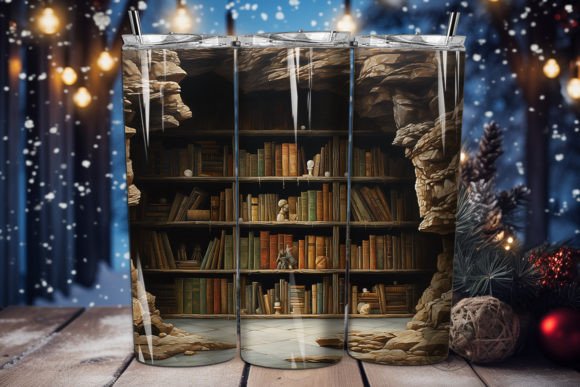
For crafters and small business owners specializing in custom drinkware, selecting the right sublimation design is a critical step in the production process. The 3D Bookshelves Tumbler Wrap Sublimation represents a specific category of digital assets designed for 20 oz skinny tumblers. Unlike standard flat illustrations, these designs utilize depth cues, shading, and perspective to create the illusion of three-dimensional bookshelves wrapping around the cylindrical surface of the tumbler. Understanding the technical specifications, aesthetic applications, and practical limitations of these files is essential for determining whether they align with your current project goals.
Understanding the Digital Asset
At its core, this product is an instant digital download, typically delivered as a high-resolution PNG file within a ZIP archive. The standard dimensions for a 20 oz skinny tumbler wrap are approximately 9.3 inches by 8.2 inches at 300 DPI. This resolution is industry-standard for sublimation printing, ensuring that when the image is transferred onto polyester-coated substrates, the result is sharp and free of pixelation.
The "3D" aspect of the design refers to the visual style rather than a physical texture. These files often feature watercolor-style books, wooden shelving units, and literary motifs arranged in a seamless pattern or a continuous wrap. When applied correctly, the curvature of the tumbler enhances the 3D effect, making the books appear to sit on shelves that encircle the cup. It is important to note that this item does not include any physical tumblers, ink, or paper; it is strictly a digital file intended for users who already possess sublimation printing capabilities.
Aesthetic Appeal and Target Audience
The primary reason creators gravitate toward Bookshelves tumbler wrap designs is their strong resonance with specific niche markets. The "book lover" demographic is vast and highly engaged, often seeking merchandise that reflects their passion for reading, libraries, and literature. A Bookshelves background or 3D Bookshelves pattern offers a sophisticated alternative to generic text-based quotes.
The watercolor aesthetic frequently found in these packs adds a hand-painted, artisanal feel that appeals to customers looking for unique, boutique-style items. Whether used for personal gifts, teacher appreciation presents, or inventory for an Etsy shop, the design serves as a versatile canvas. The seamless nature of the pattern allows for flexibility; if the alignment during the wrapping process is slightly off, the continuous design ensures there are no jarring breaks or obvious errors in the final product.
Technical Considerations and Workflow
Before purchasing a 3D Bookshelves Tumbler Wrap Sublimation Background, one must evaluate their technical readiness. Sublimation is a chemical process that requires heat, pressure, and specific materials. To utilize these PNG files effectively, you need access to a sublimation printer, sublimation ink, sublimation paper, and a convection oven or tumbler press capable of accommodating 20 oz skinny tumblers.
The file sizing (9.3 x 8.2 inches) is pre-calculated for standard 20 oz skinny tumblers, but slight variations in tumbler manufacturers can occur. Users should always measure their specific blanks and adjust the image size in their editing software if necessary to ensure full coverage without overlapping seams excessively. Furthermore, color management is vital. The vibrant colors seen on a computer monitor may shift during the heat press process. A test print is highly recommended to calibrate color profiles and ensure the Bookshelves png translates accurately to the physical product.
Benefits of Using Pre-Made Digital Wraps
There are distinct advantages to utilizing a pre-made Straight Tumbler Wrap PNG versus creating a design from scratch. The most significant benefit is time efficiency. Creating a realistic 3D illustration with proper perspective and lighting requires advanced graphic design skills and significant hours of work. By downloading a ready-to-print file, producers can bypass the design phase and move immediately to production.
Additionally, these files often come optimized for the sublimation workflow. They are usually provided at 300 DPI, which is crucial for print quality. Amateur designers might inadvertently create files at 72 DPI (web resolution), resulting in blurry prints. Professional-grade downloads eliminate this risk. The inclusion of a 3D Bookshelves 3D seamless pattern also simplifies the alignment process, reducing material waste caused by misprinted wraps.
Tradeoffs and Limitations
While convenient, relying on digital downloads has tradeoffs. The most notable limitation is the lack of exclusivity. Since these are digital products, other sellers may purchase and use the exact same Bookshelves wrap design. For businesses aiming to build a brand based on unique, one-of-a-kind artwork, this saturation can be a drawback. In such cases, commissioning a custom illustrator or creating original vector art might be a better long-term strategy.
Another consideration is the learning curve associated with the file format. The product description explicitly states that buyers need to know how to use these files for sublimation printing. There is no instructional guide included on how to operate a heat press or manage color profiles. Beginners who have never performed sublimation before may find themselves frustrated if they expect the digital file to automatically result in a perfect physical product without understanding the underlying mechanics of the craft.
Decision-Making Insights
When deciding whether to invest in a 3D Bookshelves Tumbler Wrap Sublimation file, consider your current business model and skill set. If you are an experienced sublimator looking to expand your catalog quickly with trending themes like "dark academia" or "cozy reading," this type of asset is a strong fit. It allows for rapid prototyping and immediate listing on marketplaces.
However, if you are entirely new to sublimation, you must factor in the cost of equipment and the time required to learn the technique. The digital file is only one component of a larger ecosystem. Additionally, if your goal is to sell high-end, bespoke items where uniqueness is the primary selling point, you may want to weigh the pros and cons of using a shared template versus developing proprietary designs.
Ultimately, the value of a Bookshelves skinny tumbler design lies in its execution. A high-quality PNG provides the foundation, but the final product's success depends on the quality of the tumbler blank, the precision of the heat press settings, and the care taken during the wrapping process. For those who have the equipment and the audience, these digital assets offer a practical, efficient pathway to producing attractive, marketable goods.